The Australia-European Union Free Trade Agreement (A-EU FTA) is one of the most significant trade developments in recent years for the Australian red meat industry. For UK and European chefs, buyers, distributors and consumers who value Australian beef and lamb, here is a clear guide to what the deal contains, what it means in practice, and what comes next.
What Is the Australia-EU Free Trade Agreement?
The A-EU FTA is a comprehensive trade deal between Australia and the 27 member states of the European Union. The EU is the world’s second largest economy, with a GDP of approximately $30 trillion and a consumer market of around 450 million people.
Until now, the EU has been Australia’s largest trading partner without a free trade agreement in place. When the agreement enters into force, 97.8 per cent of Australia’s goods exports to the EU will be eligible for duty-free access.
What Does It Mean for Australian Beef?
Access for Australian beef into the EU has historically been tightly restricted. Under existing World Trade Organisation rules, Australia held a country-specific quota of 3,389 tonnes (shipped weight), and that quota carried a 20 per cent in-quota tariff, making it commercially challenging.
The A-EU FTA changes this significantly. On entry into force, the in-quota tariff on the existing quota is eliminated immediately. Beyond that, two new tariff rate quotas are introduced, building over ten years to a total guaranteed preferential access of 35,000 tonnes (carcase weight equivalent) per year. This includes:
- 16,830 tonnes of duty-free access for grass-fed and grain-finished beef (up to 70 days grain feeding).
- 13,770 tonnes of any beef at a reduced in-quota rate of 7.5 per cent.
Both new quotas begin at approximately one third of their full volume on entry into force, scaling to full volume over five years for the duty-free quota and ten years for the reduced-tariff quota.
Andrew McDonald, Chair of the Australia-EU Red Meat Market Access Taskforce, acknowledged on MLA’s On the Ground podcast that the EU has demonstrated genuine demand for high-quality grain-fed beef, noting that Australian producers had proven there was appetite for a product that EU domestic producers were not in a position to supply. The new quotas, while building gradually, create a structured and guaranteed pathway into a market that has until now been largely closed to Australian beef.
What Does It Mean for Australian Lamb?
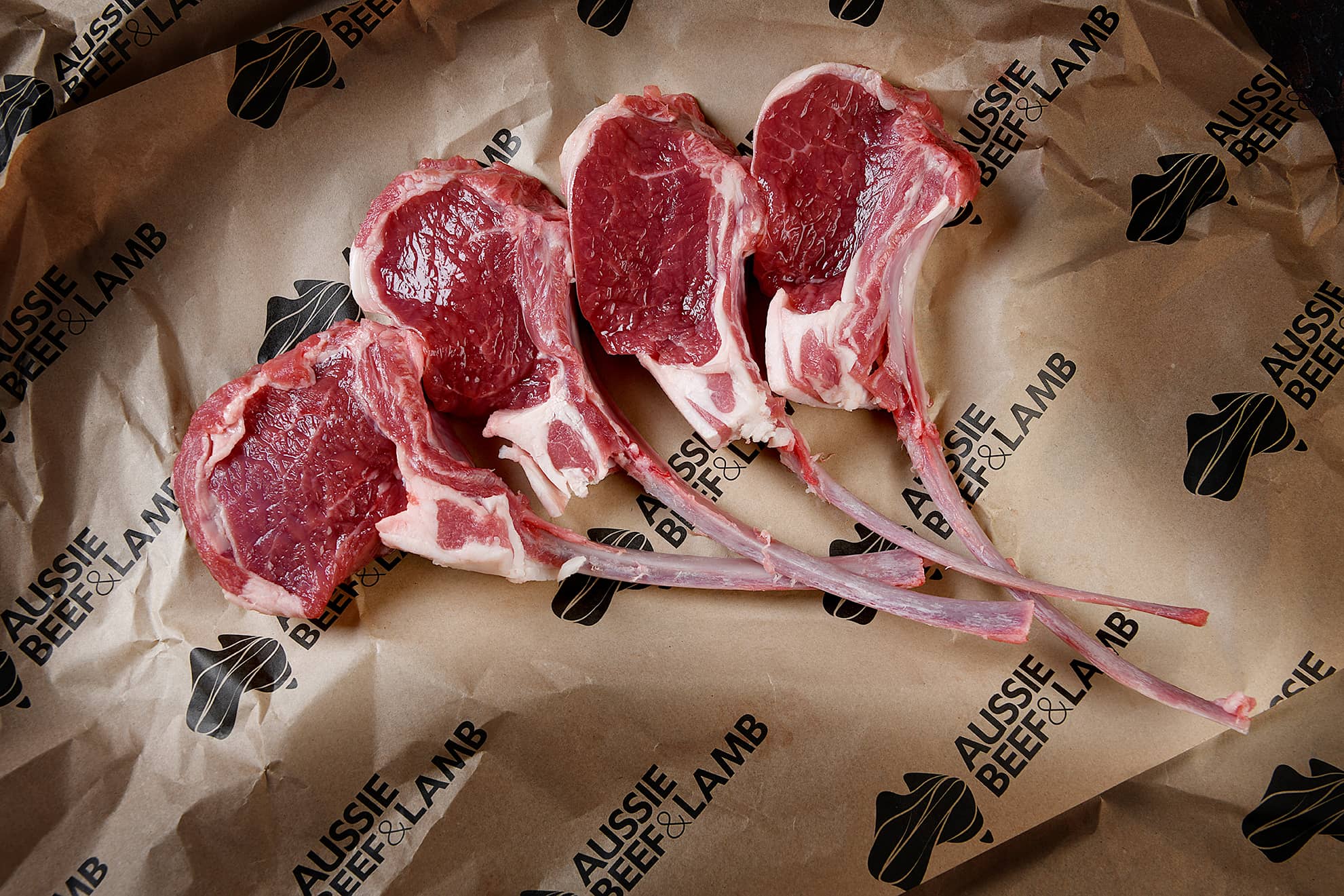
Australia is the world’s largest exporter of sheep and goat meat, exporting $6.5 billion globally in 2025. The EU has been a limited destination, with existing quota access capped at 5,851 tonnes (carcase weight equivalent) per year, with Australian sheep meat exports to the EU valued at approximately $81 million in 2025.
The A-EU FTA unlocks 25,000 tonnes of new duty-free access for sheep meat, scaling to full volume over seven years. This is split across two quotas:
- 18,125 tonnes for any sheep meat.
- 6,875 tonnes specifically for frozen sheep meat.
Combined with the existing quota, Australian exporters will have guaranteed preferential access of 30,851 tonnes per year once the deal is fully phased in.
What Does This Mean for UK and European Buyers?
For UK buyers, chefs and consumers, it is important to be clear: the A-EU FTA applies to trade between Australia and the 27 EU member states. It does not affect the terms of the Australia-UK Free Trade Agreement (A-UK FTA), which entered into force in May 2023 and governs the trading relationship between Australia and the UK separately. The quality, consistency and supply reliability that UK buyers and chefs have come to depend on remain unchanged.
For European buyers, distributors and chefs, the picture is different and genuinely significant. The A-EU FTA creates a direct preferential trade channel for Australian beef and lamb into Europe that has not previously existed at any meaningful scale. As the quotas build over the coming years, European foodservice, retail and distribution businesses will have growing access to the quality, consistency and provenance that Australian red meat is recognised for across global markets.
The EU is one of the world’s most discerning food markets. The fact that the A-EU FTA includes specific provision for both grass-fed and grain-fed beef reflects the breadth of demand across European consumer preferences. For professional buyers in Europe, this is an opportunity to explore an offer that is already well established and highly regarded in markets including the UK, Japan, the Middle East and Southeast Asia.
The Industry Response
The conclusion of the A-EU FTA was met with a mixed response from the Australian red meat industry. Andrew McDonald, Chair of the Australia-EU Red Meat Market Access Taskforce and the industry figure closest to the negotiations, was candid in his assessment on MLA’s On the Ground podcast, describing the outcome as deeply disappointing for Australian exporters, who had held higher ambitions for the level of access the deal would deliver.
His concern centred on two specific points. First, that the quotas, while an improvement on the current position, lock Australia into capped and tariffed access for the foreseeable future rather than providing a pathway to genuinely open trade. Second, that a portion of the beef access carries a tariff of 7.5 per cent in perpetuity, which is an unusual outcome in Australia’s trade agreements and adds a cost burden that other deals have not imposed.
These are legitimate concerns, and they reflect the ambitions the industry brought to a negotiation that has been in progress for nearly a decade.
At the same time, McDonald was clear that the Australian red meat industry is resilient and does not stand still. The immediate focus will be on maximising the value of the access that has been secured, while continuing to pursue improved terms through the mechanisms the deal provides, and through engagement with other trading partners and markets.
Looking Ahead: Ratification and the Road to Market
The A-EU FTA has not yet entered into force. Before it does, both parties must complete a structured ratification process.
The first step is finalising the agreement text. The draft will undergo legal checks and be translated into the 24 official languages of the EU. The European Commission will then submit the agreement to the Council of the European Union for approval by qualified majority, while Australia completes the domestic processes required for signature, including approval from the Federal Executive Council.
Signature is expected to take place in late 2026 or early 2027, once both sides have completed these preparatory steps. After signature, a further round of parliamentary processes follows. In Australia, this involves scrutiny by the Joint Standing Committee on Treaties and consideration of any domestic legislation required. In the EU, the European Parliament must give its consent before ratification is complete.
These parliamentary processes are expected to take up to a further year after signature. Entry into force is therefore realistically anticipated in 2027 or 2028. For trade buyers and planners on both sides, this means the new quotas are a medium-term development rather than an immediate change to the supply landscape.
Built-In Pathways for Review
One of the more significant and often overlooked aspects of the A-EU FTA is the review mechanism it contains. According to DFAT, Australia may request a review of both the beef and sheep meat tariff rate quotas no earlier than five years after entry into force. In addition, Australia may request consultations with the EU if there is persistent or systemic underfill of the quotas, to address the underlying causes.
These provisions matter. They mean the deal is not a fixed ceiling. If demand grows, if supply conditions change, or if the quotas prove insufficient to meet market needs, there is a structured and agreed process for revisiting the terms. For an industry that views the current quotas as a starting point rather than a destination, these mechanisms are an important part of the longer-term picture.
A Clear Direction of Travel
The A-EU FTA is not the transformative outcome the Australian red meat industry sought. Those working closest to the negotiations have been open about that. But it does mark a meaningful step forward from a position where access to one of the world’s largest consumer markets was severely restricted, and it establishes a framework that can be built upon over time.
Australian red meat, produced sustainably, raised with care, and backed by world-leading food safety and traceability systems, continues to find new markets and new recognition across the globe. The EU, with its 450 million consumers and its genuine appetite for high-quality beef and lamb, represents a long-term opportunity. The
A-EU FTA opens the door. How far it opens over time will depend on the industry’s ability to demonstrate the quality and consistency it has already proven in markets around the world.
For European buyers exploring Australian beef and lamb for the first time, the place to start is with the product itself. The quality speaks for itself.
Our list of European already supplying beef and lamb into European markets can be found here.
Back to Blogs