A steakhouse-quality dinner does not always need a restaurant table. Choose the right cut of beef, then give it the attention it deserves. That is often enough to turn a meal at home into something special.
From an exceptionally tender fillet to a generous côte de boeuf, steakhouse cuts are chosen for tenderness, flavour, marbling and presentation. Australia’s varied landscape and progressive farming practices produces some of the best beef in the world. Making Australian beef highly sort after by leading chefs around the world. You can read more about how Australia produces the best beef here.
This guide explains premium beef cuts often found on steakhouse menus, including fillet, chateaubriand, T-bone, Porterhouse, côte de boeuf and ribeye cap. It also includes practical advice for cooking them indoors.
Cooking outdoors instead? See our guide to the best BBQ cuts of beef and lamb.
Fillet Steak: The Most Tender Cut of Beef
Beef fillet steak, also known as beef tenderloin, is prized for its tenderness. Cut from the short loin, it is a lean cut with relatively little fat and a fine texture.
For many people, the appeal of beef fillet steak is its exceptionally soft texture. Because it contains less fat than cuts such as ribeye, it has a more delicate flavour. This lets the natural beef character come through without the richness of heavily marbled steaks.
Fillet is particularly well suited to special occasions. Thick portions can be seared in a hot pan to create a well-browned exterior, then finished gently in the oven. The key is not to overcook it, as fillet can lose some of its appeal if cooked too far.
For a classic steakhouse presentation, serve thick-cut fillet steaks with a simple sauce and carefully chosen sides, allowing the texture of the beef to remain the focus.
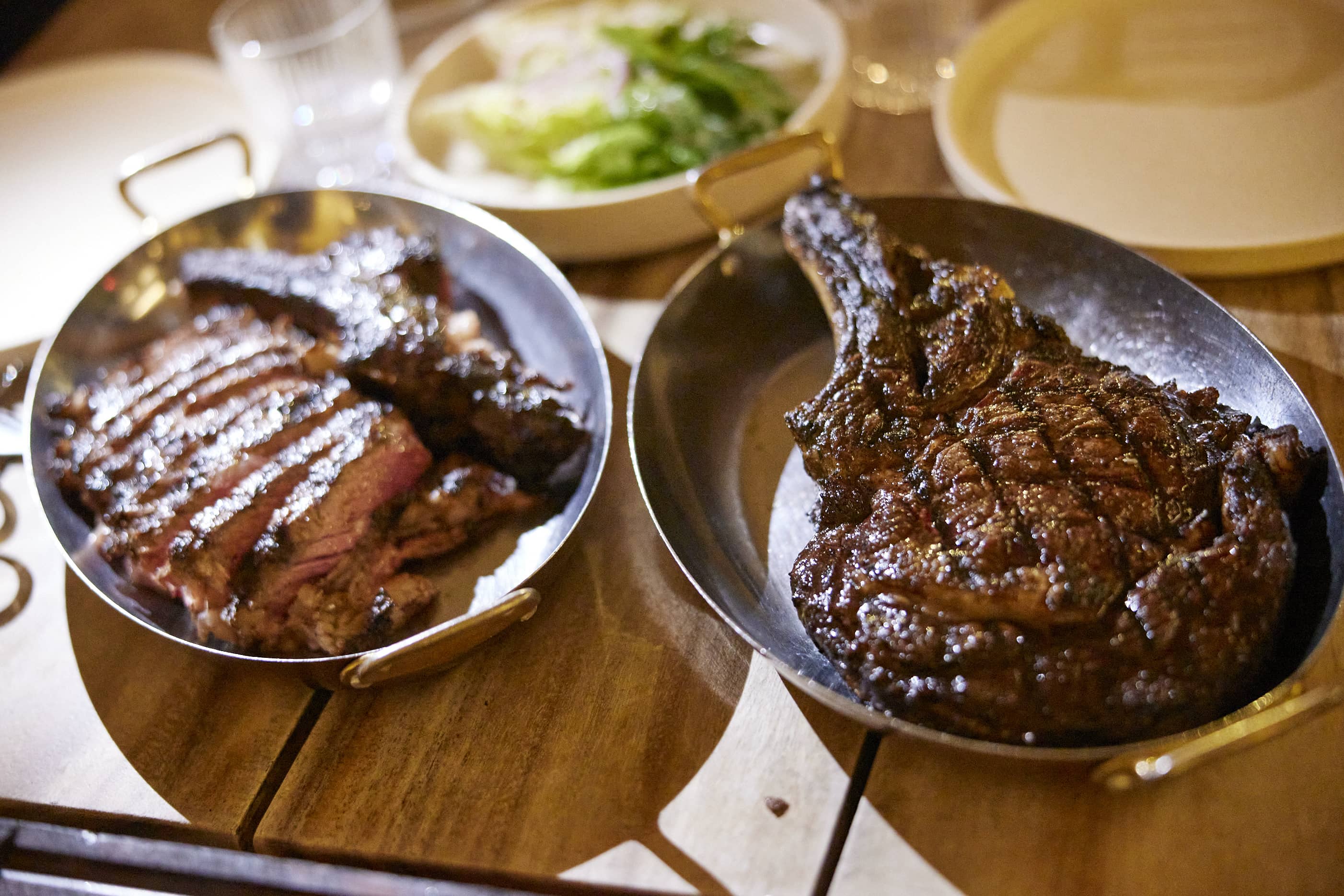
Chateaubriand: A Fillet Steak for Sharing
Chateaubriand is a centre-cut portion of the beef fillet, traditionally prepared as a thick piece and cooked whole before being carved into portions.
Rather than treating it as an individual steak, chateaubriand is often presented as a sharing dish. Its size and presentation make it particularly suited to a special dinner, with the cooked beef carved at the table.
The centre-cut nature of chateaubriand gives it a fairly even shape. This makes it well suited to searing before finishing in the oven. Browning the outside first develops flavour, while gentler oven cooking helps the centre reach the desired doneness without overcooking the exterior.
Once cooked, allow the meat to rest before carving. This is particularly important with a sharing cut, as resting makes it easier to carve neatly and helps retain the steak's juices.
If you are looking for a premium beef cut for two people rather than individual steaks, chateaubriand is one of the classic steakhouse choices.
T-Bone Steak: Is It the Same as a Porterhouse?
The terms T-bone steak and Porterhouse steak are often used interchangeably. The confusion comes from the fact that terminology varies between countries. In the UK, T-bone is the more familiar butchery term for a steak containing two different muscles separated by a distinctive T-shaped bone. One side is the sirloin, while the smaller, more tender side is the fillet.
The term Porterhouse is more common on American steakhouse menus. It has also become familiar to UK consumers through restaurant menus and international food content. In practice, a Porterhouse is usually a larger version of the same general cut, with a more substantial portion of fillet.
The important point is that the exact terminology is not universal. In the US, there is a formal distinction based on the size of the fillet portion. A Porterhouse must have a larger fillet section than a T-bone. UK butchery does not use an equivalent formal classification, so the terms can appear differently depending on the butcher or restaurant.
For a UK reader, the simplest way to think about it is this: a T-bone contains both sirloin and fillet on either side of a T-shaped bone. A Porterhouse generally refers to a larger, more generous version with more fillet. That combination makes the cut a popular steakhouse choice, offering the richer character of sirloin alongside the tenderness of fillet in a single steak.
It does, however, present a cooking challenge. The two muscles have different characteristics. The fillet side is leaner and can cook more quickly than the sirloin side. A thick T-bone or Porterhouse therefore benefits from careful heat management.
For a substantial steak, sear it thoroughly in a hot pan before transferring it to the oven to finish cooking. Positioning the leaner fillet side slightly further from the strongest heat can also help prevent it from becoming overcooked before the sirloin is ready.
The result is one of the most impressive steakhouse cuts to serve at home, particularly when placed whole on the table before being carved.
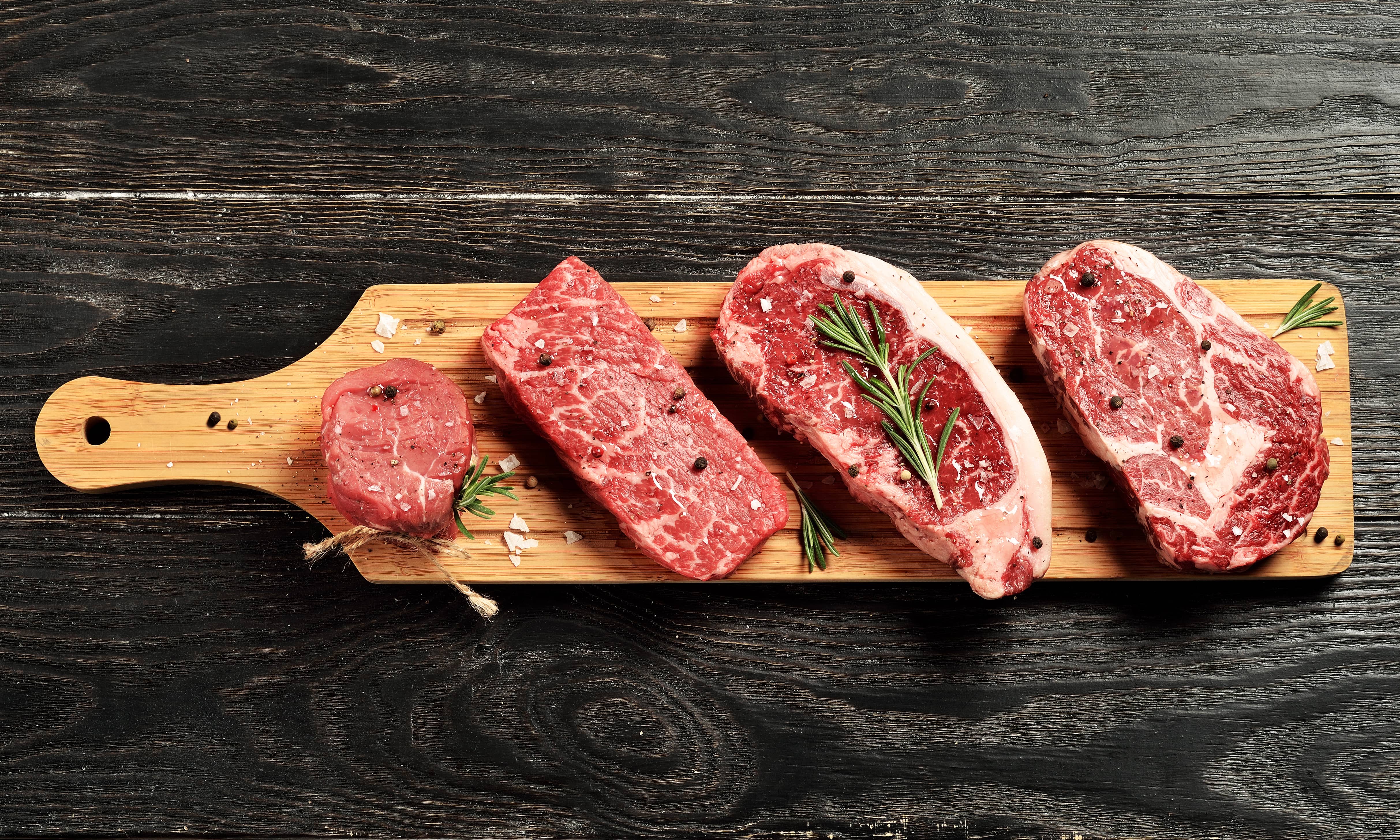
Côte de Boeuf: A Bone-In Steak Made for Sharing
Côte de boeuf is essentially a thick, bone-in rib steak. The French name may sound unfamiliar, but the cut itself is straightforward. It is a substantial rib cut with the bone left attached.
Its combination of bone, thickness and marbling makes côte de boeuf particularly suited to the steakhouse experience. It is usually cooked as a larger piece to be shared between two or more people.
For an indoor preparation, sear the meat in a hot pan to develop a deeply browned exterior, then transfer it to the oven to continue cooking more gently. Allow plenty of time for it to rest before carving, and consider presenting it whole at the table before slicing to make the most of its impressive appearance.
Is côte de boeuf the same as a tomahawk steak?
No. Both are bone-in rib cuts, but they are presented differently. A côte de boeuf is usually a thick rib steak with a shorter bone, so it suits pan-searing and oven-finishing for an indoor meal. A tomahawk has a much longer section of bone left attached, creating the distinctive long-bone presentation associated with grilling. The two cuts can offer a similar rich, beefy eating experience, but they differ in presentation and preparation.
Ribeye Cap: The Steakhouse Cut You May Not Know
The ribeye cap, also known as the spinalis dorsi, is the outer muscle that sits around the ribeye. It is highly regarded for its tenderness and flavour and is sometimes treated as a premium cut in its own right.
Its appeal comes from the combination of tenderness and intramuscular fat within the muscle. Rather than serving the entire ribeye, the cap can be separated and prepared as a smaller, particularly luxurious steak.
This is a cut worth asking a specialist butcher about, as it is less common in standard supermarket meat counters. Keep the preparation simple: a hot pan and careful cooking let the natural characteristics of the cut do most of the work.
How to Cook Steakhouse Cuts Like a Pro
Premium beef does not need complicated cooking. The best approach is often to keep the technique simple and concentrate on heat, timing and resting.
1. Start with a hot pan
Use a heavy-based frying pan that can hold a high heat. Pat the surface of the beef dry before cooking so it sears rather than steams. Add a small amount of suitable cooking oil, place the beef in the hot pan, and avoid moving it unnecessarily while the first side develops colour.
2. Finish thicker cuts in the oven
Thicker cuts such as chateaubriand, côte de boeuf and substantial T-bone or Porterhouse steaks can benefit from being seared first, then finished in the oven. This gives you more control over the cooking process while still developing the browned exterior associated with a steakhouse steak. A butter baste can be added towards the end of cooking, with garlic and thyme if desired. Keep the technique restrained, as premium beef does not need a long list of ingredients to taste good.
3. Rest before serving
Resting is one of the easiest steps to overlook and one of the most useful to get right. After cooking, transfer the steak to a warm plate or board and allow it to rest before cutting. This is particularly important for larger cuts such as chateaubriand and côte de boeuf, which need to be carved and shared.
4. Carve sharing cuts carefully
For chateaubriand and côte de boeuf, use a sharp knife and carve across the meat into even portions. Presenting the whole cut before carving gives the meal some of the theatre of a steakhouse dinner. For a T-bone or Porterhouse, separate the meat from the bone if required, then slice the sirloin and fillet into portions.
Steakhouse Beef Cuts: FAQs
What is the difference between a T-bone and a Porterhouse steak?
Both cuts contain sirloin and fillet separated by a T-shaped bone. In the US, a Porterhouse has a larger minimum portion of fillet than a T-bone. In the UK, the terminology is less formally defined, and T-bone is the more familiar butchery term.
What is chateaubriand cut from?
Chateaubriand is a thick, centre-cut portion of the beef fillet, traditionally cooked as a whole piece and carved for sharing.
Is côte de boeuf the same as a tomahawk steak?
No. Côte de boeuf generally has a shorter bone, while a tomahawk is characterised by its long exposed bone. Both are bone-in rib cuts well suited to a rich, beefy eating experience.
Where can I buy these cuts in the UK?
Premium cuts such as fillet and T-bone are available from a range of retailers. Less common cuts, such as chateaubriand, côte de boeuf and ribeye cap, may be easier to find through a specialist butcher.
Choosing the Right Steakhouse Cut
There is no single best steakhouse cut; the right choice depends on what you want from the meal. Fillet offers maximum tenderness. Chateaubriand makes a classic centrepiece for two. T-bone or Porterhouse gives two textures in one steak. Côte de boeuf brings richness and presentation, while ribeye cap offers something less familiar for anyone exploring premium beef cuts.
Australian beef offers a wide range of these premium cuts, with quality assurance and eating quality at the heart of its production.
Where to Buy Australian Beef
Ready to create your own steakhouse experience at home? Explore our Where to Buy page to find Australian beef in the UK.
For less commonly stocked cuts such as chateaubriand, côte de boeuf and ribeye cap, a your specialist butcher is often the best place to ask about availability and sourcing.
Back to Blogs