Best Cuts of Beef and Lamb for the BBQ: An Australian Grill Guide
From showstopping tomahawk to quick-cook lamb cutlets, discover the best Australian beef and lamb cuts for a brilliant summer BBQ, with expert tips on how to cook each one well.

From showstopping tomahawk to quick-cook lamb cutlets, discover the best Australian beef and lamb cuts for a brilliant summer BBQ, with expert tips on how to cook each one well.
When the sun shines and the BBQ comes out of the garage, the decisions you make in the butcher or supermarket matter more than most people realise. A great BBQ starts well before the coals are lit. It starts with the right cut of meat.
Australian beef and lamb are a natural fit for summer grilling. Raised across vast, open landscapes by farmers whose expertise stretches back generations, the quality is built in from the start. Australia's Meat Standards Australia (MSA) grading system provides an independent, consumer-focused assessment of eating quality, covering tenderness, juiciness, and flavour at the level of individual cuts. For more on what that means in practice, see how leading UK chefs rate Australian beef and lamb.
This guide covers the best cuts of Australian beef and lamb for the BBQ, including sirloin, ribeye, picanha, tomahawk, lamb cutlets, lamb neck, and butterflied leg, along with practical advice on marinades, rubs, heat control, and resting.
Australian beef delivers on the grill because of its consistent marbling, reliable eating quality, and the depth of flavour that comes from a natural, well-managed rearing environment. Whether you are a confident griller or still finding your feet, these cuts give you a solid foundation to work with.
The benchmark. Ribeye steak is the one that tends to stop conversation at the table. Ribeye carries more intramuscular fat than sirloin, which translates to richer flavour and a naturally juicy result even at higher temperatures. The fat also bastes the steak as it cooks, which makes it well suited to direct heat on a gas or charcoal grill. Cook it to medium-rare, rest for at least five minutes, and serve simply. The flavour does the work.
Sirloin is a common choice in the UK. It strikes a balance between tenderness and a deep, savoury beef flavour. It is versatile enough to serve whole or sliced for sharing, and it rewards straightforward cooking. Get your grill hot, season generously with salt and pepper, cook to medium-rare over direct heat, and rest it well before serving. A peppery rocket salad or some quickly charred spring onions alongside will do the job.
Made famous with French “Steak Frites”, Bavette (Flap Meat) is cut from the flank, bavette is one of the most underused steaks in the UK home kitchen and one of the most rewarding on a hot grill. It has an intensely beefy character that comes alive over direct heat. The key is speed: cook it quickly, do not overcook it, rest it properly, and always slice across the grain. Without that last step, bavette can be chewy. With it, it is exceptional. Chimichurri or a sharp herb dressing are the natural partners.
Still relatively unfamiliar in the UK, picanha is a cut well worth seeking out. It is prized in Brazil and across South America for its generous fat cap, which melts into the meat as it cooks and creates a rich, caramelised crust. Grill it whole or cut into thick steaks. Rest it before slicing and serve with sea salt and a squeeze of lime juice or a simple tomato salad. Once you have tried it, it tends to become a regular on the summer menu.
Australian Wagyu is renowned for its exceptional marbling and depth of flavour, and the flat iron is one of the most interesting ways to experience it on a BBQ. Cut from the shoulder, when trimmed properly, the flat iron is tender and full of flavour. Well-marbled, and quick to cook, it’s a more accessible entry point into Wagyu than a full sirloin or ribeye. The result is rich and satisfying with a flavour profile that reflects everything that makes Australian Wagyu special.
For a sense of how a professional chef approaches this cut, the Wagyu Flat Iron Steak with Truffle Mash and Lemon Thyme Butter recipe comes from Ioannis Grammenos of Heliot Steakhouse, one of London's most respected grill restaurants and an Aussie Beefmate. Ioannis has visited Australian farms firsthand and brings that knowledge of the provenance and quality to everything he cooks. For the BBQ, the same cut works beautifully over direct heat, finished simply.
For further reading on Australian Wagyu, our Wagyu guide covers the breed, the marbling, and what sets it apart in detail.
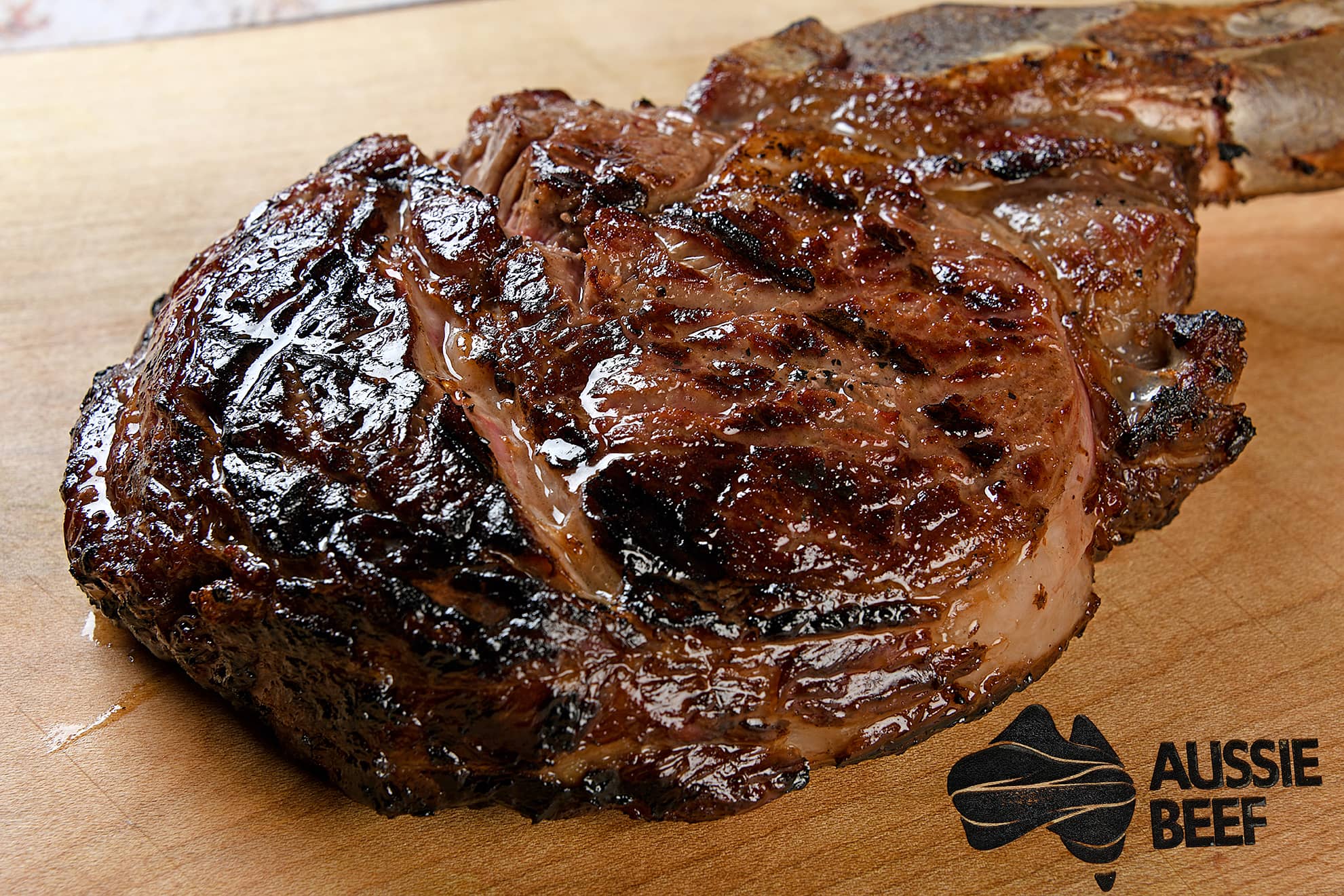
The tomahawk is the most dramatic cut you can put on a BBQ. A bone-in ribeye with the full rib still attached, it is typically between one kilogram and one and a half kilograms, making it the centrepiece of any outdoor feast and a genuine talking point before anyone has even tasted it.
It is also the most demanding cut on this list to cook well at home. The size and bone mass mean it takes significantly longer than a standard steak, and the margin for error is wider. The approach that works best is a reverse sear: cook the tomahawk low and slow over indirect heat, away from the flames, until the internal temperature reaches around 50°C. Then move it directly over the coals or burners for a few minutes each side to develop the crust. Rest it for at least fifteen minutes before carving.
This is not an everyday BBQ cut. It is an occasion cut, one that rewards patience and a thermometer. When it is done well, there is nothing quite like it.
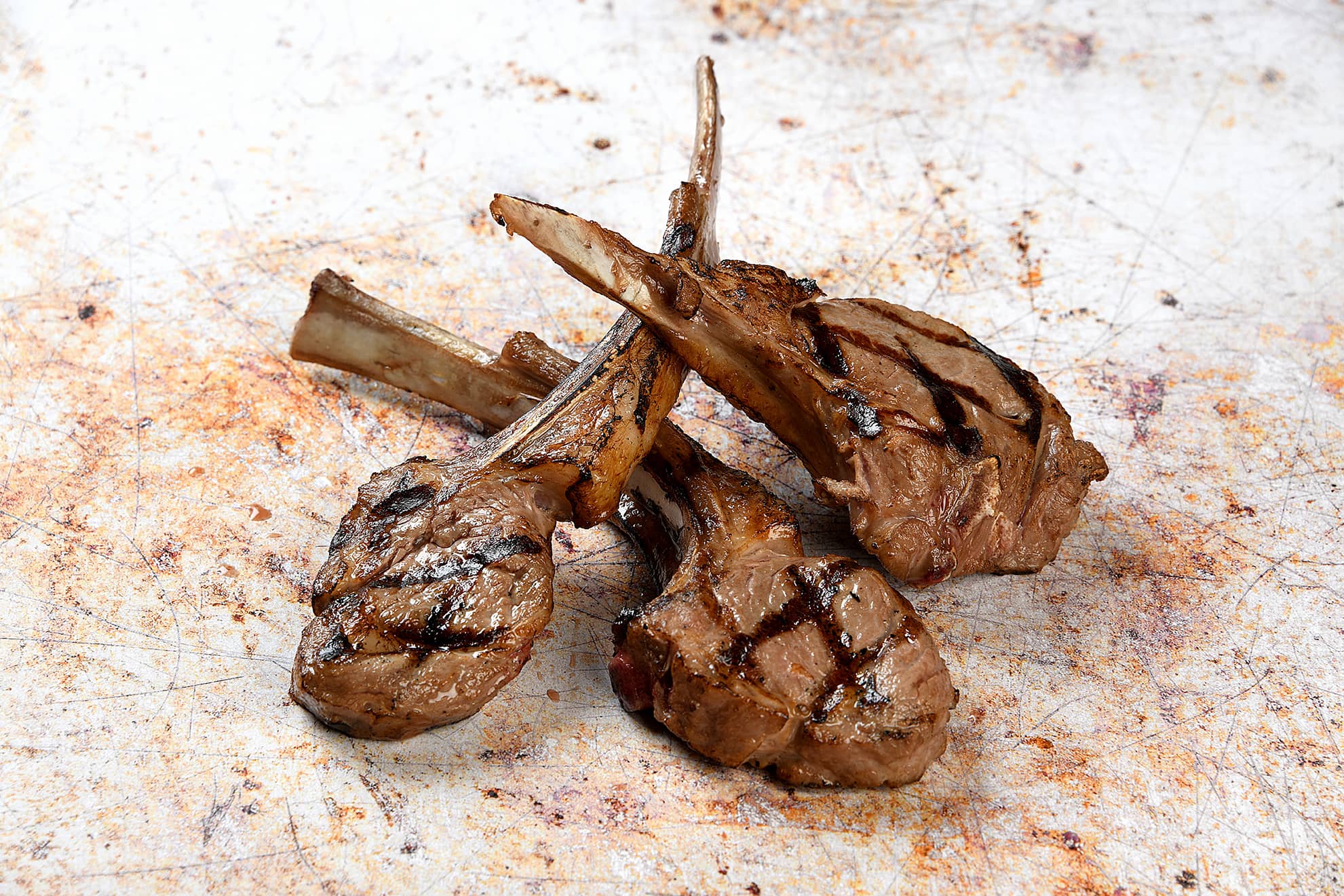
Australian lamb is among the most versatile meats you can put on a grill. From quick-cooking cutlets that need nothing more than a hot grate and a few minutes to crowd-pleasing joints that reward a little extra time and care, it adapts well to almost any BBQ setup. The key is matching the cut to how you want to cook.
Lamb cutlets are the natural starting point for any Aussie lamb BBQ. They are quick to cook, straightforward to handle, and full of flavour. A simple marinade of garlic, fresh rosemary, lemon juice, and olive oil applied an hour before cooking makes a real difference. Sear them over high heat until the fat is properly rendered and golden, and serve them when the meat is still slightly pink. They work well as a starter or as part of a mixed grill alongside other cuts.
Lamb rump is lean with a thick covering of fat that caramelises perfectly on the BBQ. Tender, and quick to cook, makes it a strong option when you want something a little different from the standard chops and cutlets. It is excellent sliced for sharing, and the texture rewards careful temperature control. Aim for pink in the centre, rest it well to allow the fat layer to lubricate the rest of the meat, then slice across the grain. Serve with a fresh herb dressing, a squeeze of lemon, or alongside charred flatbreads.
Lamb neck fillet is one of the most flavoursome cuts on the animal and is beginning to earn the recognition it deserves among home cooks and restaurant kitchens alike. Slow-braised, it is already well known. On the BBQ, cooked low and slow then finished over direct heat, it takes on a depth of charred, smoky flavour that is difficult to achieve with any other cut.
Tom Cook of Smith and Wollensky, one of London's leading steak and grill restaurants and an Aussie Lambassador, has developed a recipe that shows exactly what this cut can do. The BBQ Lamb Necks recipe is worth bookmarking for anyone who wants to move beyond the familiar cuts and try something genuinely rewarding on the grill.
Whilst a roast leg of lamb is very familiar in the UK, a butterflied leg of lamb remains an unfamiliar preparation to many UK home cooks, but it is one of the most effective ways to cook a large cut on the BBQ. Deboning and opening the leg flat means it cooks far more quickly and evenly than a traditional roast, while still delivering the richness and variety of texture that makes leg such a crowd-pleaser. The edges caramelise beautifully while the thicker sections stay juicy.
The Butterflied Lamb Leg with Roasted Cauliflower and Zesty Salad recipe, is an excellent guide for anyone approaching this cut for the first time.
Starting with quality Australian beef and lamb is the right foundation. What happens at the grill is what determines whether you make the most of it. A few adjustments in approach, particularly around heat control, can make a significant difference to the result.
Taking the fridge chill off meat before BBQ is one of the easiest ways to improve flavour, texture and consistency. Cold meat hitting high heat can burn on the outside while staying raw or cold in the centre, especially with thick steaks or larger cuts. Allowing meat to sit out briefly helps it cook more evenly, keeps muscle fibres from tightening too quickly and improves control over your final doneness. It also helps fat render properly which is crucial for cuts like ribeye, Wagyu, lamb or picanha. If salted beforehand, resting time allows seasoning to penetrate deeper and helps create a better crust, juicier texture and more balanced BBQ results overall.
The most common BBQ mistake in the UK is cooking on heat that is too fierce, too soon. Whether you are using gas or charcoal, you need two zones: a hot zone for direct heat and a cooler zone for indirect heat. For charcoal, push the coals to one side once they have turned grey and ash-coated rather than glowing red. For gas, leave one or two burners on a lower setting. This gives you control. Thin cuts like cutlets and bavette suit direct high heat and cook quickly. Thicker cuts like tomahawk, butterflied leg, and lamb neck need time over lower indirect heat before a final sear. Putting a thick cut straight onto fierce heat produces exactly the burnt outside and raw inside that frustrates so many BBQ cooks.
Resting is not optional. When meat is removed from the heat, the muscle fibres relax and the juices redistribute through the cut. Skip this step and those juices run straight onto the board. As a guide: steaks need five to ten minutes, a butterflied leg of lamb needs fifteen minutes, and a tomahawk benefits from at least fifteen to twenty minutes under a loose tent of foil. Use the resting time to get sauces, salads, and sides ready.
A meat thermometer removes the guesswork from every BBQ, particularly with thicker cuts where the exterior gives you no reliable indication of what is happening inside. For beef, medium-rare sits at around 55 to 58°C at the thickest point. For lamb, most people prefer it a little warmer, around 60 to 63°C for a pink result. Pull the meat off the heat a few degrees before your target temperature, as it continues to cook during resting.
Bavette, lamb rump, and lamb neck all have a pronounced grain: visible lines of muscle fibre running through the cut. Slicing parallel to those lines leaves the fibres long, which results in a chewier texture. Slicing across the grain shortens them significantly and transforms the eating quality. Take a moment to identify the grain before you start cutting. It is a simple step that makes a genuine difference with these cuts.
A marinade adds flavour and, in some cases, helps break down tougher muscle fibres, but it is not appropriate for every cut. The general principle: the more flavourful and well-marbled the cut, the less it needs a marinade. A tomahawk or ribeye needs little beyond salt and pepper. A bavette, lamb neck, or lamb chump chop benefits considerably from a few hours in a marinade.
For lamb, the classic combination of olive oil, garlic, lemon juice, and fresh rosemary or thyme is hard to improve on. An hour is useful; four hours is better; overnight in the fridge is excellent for neck or chump chops.
For beef, a marinade built around soy sauce, garlic, a splash of Worcestershire sauce, and a little oil works well for bavette and flank cuts. Avoid acidic marinades for Wagyu or highly marbled beef, as the acid can affect the texture of the fat.
For a different approach altogether, the Beef Skewers with BBQ Sauce recipe shows how a well-built sauce applied during cooking can achieve a similar depth of flavour with beef that suits a more casual, sociable BBQ format.
A dry rub is a mixture of salt, spices, and dried herbs applied directly to the surface of the meat, usually an hour before cooking or up to overnight. Unlike marinades, rubs do not add moisture, but they create a well-seasoned crust that caramelises beautifully over direct heat. They are particularly effective on cuts with a fat cap, such as picanha, or on thicker cuts cooked low and slow before a final sear, such as tomahawk or lamb neck.
A simple beef rub might include smoked paprika, ground cumin, garlic powder, black pepper, and flaked salt. For lamb, dried oregano, ground coriander, smoked paprika, and a pinch of chilli works well. Apply the rub generously, pressing it into the surface, and allow it to sit uncovered in the fridge if possible so the surface dries slightly before it hits the heat. This helps develop a better crust.
The starting point for a great BBQ is quality meat, sourced well. Visit our Where to Buy page to find stockists across the UK. If you are looking for specific cuts such as picanha, Wagyu flat iron, or tomahawk, a specialist butcher is often the best place to start, as these are less commonly available in standard supermarket ranges.